
RESTORATIVE TREATMENT
Inlays and Onlays in Mold
A precise, durable way to repair a damaged tooth while preserving as much natural tooth structure as possible.
Restoring Damaged Teeth at Alyn Dental, Mold
Alyn Dental offers inlays and onlays in Mold for patients with a tooth too damaged for a standard filling, but not requiring a full crown. These custom-made restorations are created to fit precisely into or over the tooth, offering a strong, long-lasting repair. Following an assessment, the most suitable option will be recommended for your tooth.
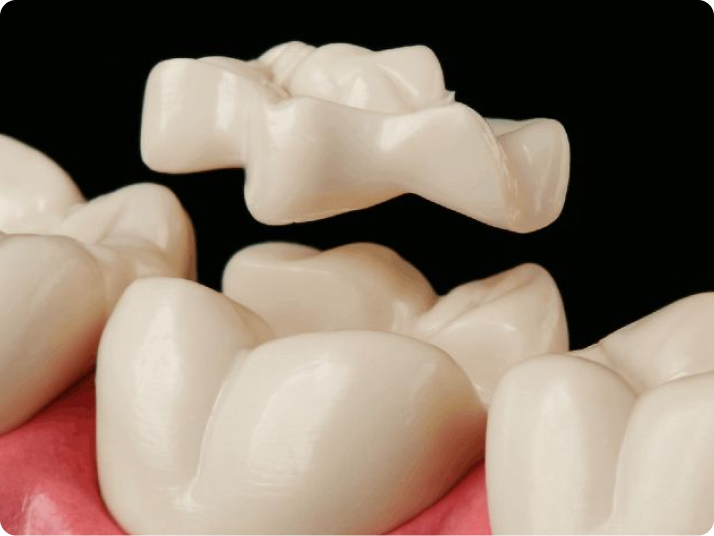
What Are Inlays and Onlays?
Inlays and onlays are custom-made restorations used to repair a tooth when the damage is too extensive for a filling but doesn’t require a full crown. An inlay fits within the grooves of the tooth, while an onlay extends over one or more of the tooth’s cusps (the raised points on the chewing surface).
Both are typically made from durable materials such as ceramic or composite, created from an impression of your tooth and bonded precisely into place. This approach preserves more of your natural tooth compared with a crown, while providing more strength than a standard filling.
YOUR SMILE JOURNEY
How The Treatment Works
The treatment usually follows four key stages.
01
STEP ONE
Consultation and Assessment
A clinical assessment, which may include an X-ray, is carried out to determine whether an inlay, onlay, or another restoration is the best option for your tooth.
02
STEP TWO
Preparation and Impressions
The damaged area of the tooth is prepared, and an impression or digital scan is taken to create a precisely fitting restoration.
03
STEP THREE
Fitting the Restoration
Once ready, the inlay or onlay is carefully bonded into place, checked for fit, and adjusted against your bite.
04
STEP FOUR
Finishing and Aftercare Guidance
The restoration is polished, and the clinician will provide guidance on caring for the tooth to help it last as long as possible.
Why Choose Inlays or Onlays?
- Repair a tooth too damaged for a standard filling
- Preserve more natural tooth structure than a full crown
- Achieve a strong, durable, and long-lasting restoration
- Restore a natural appearance with tooth-coloured materials
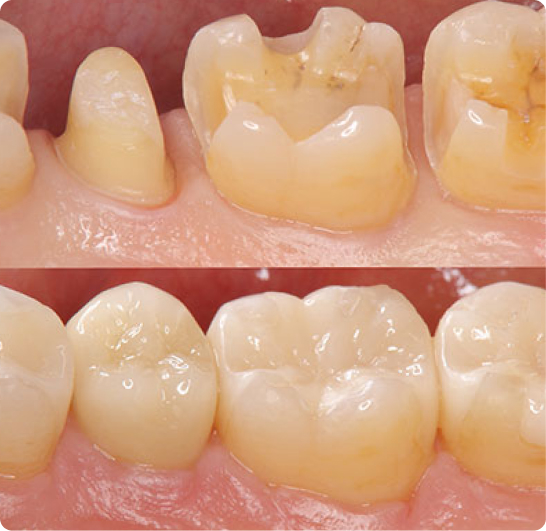
Who May Be Suitable?
- Patients with a tooth too damaged for a filling but not requiring a crown
- Patients with a cracked or heavily worn tooth
- Patients wanting to preserve as much natural tooth as possible
- Adults replacing an old, failing filling with a stronger restoration
Important:
A clinical assessment is required to determine whether an inlay, onlay, filling, or crown is the most suitable treatment for your tooth.

When to See a Dentist
You may wish to consult a dental professional if you notice:
- A tooth with a large area of decay or an old, failing filling
- Pain or sensitivity when chewing
- A cracked or heavily worn tooth
- Advice on the best way to strengthen a damaged tooth
A professional assessment can help determine the most appropriate treatment for you.
Frequently Asked Questions
An inlay fits within the grooves of the tooth's chewing surface, while an onlay extends over one or more of the tooth's cusps to cover a larger damaged area. Your dentist will recommend whichever better suits the extent of the damage.
For more extensive damage, inlays and onlays can offer a stronger, longer-lasting repair than a standard filling, since they're custom-made to fit the tooth precisely. For smaller cavities, a standard filling is often the simpler and more suitable option.
With good oral hygiene and regular check-ups, inlays and onlays can last many years, often longer than a standard filling, thanks to their precise fit and durable materials.
The procedure is carried out under local anaesthetic, so discomfort during treatment is minimal. Some sensitivity in the days afterwards is normal and usually settles quickly.