
RESTORATIVE TREATMENT
Dental Crowns in Mold
A custom-made cap to strengthen, protect, and restore the shape of a damaged or heavily restored tooth.
Restoring Damaged Teeth at Alyn Dental, Mold
Alyn Dental provides dental crowns in Mold for patients with a tooth too damaged, weakened, or heavily filled to be repaired with a filling alone. A crown fits over the entire visible surface of the tooth, restoring its strength, shape, and appearance. Following an assessment, a personalised treatment plan will be provided.
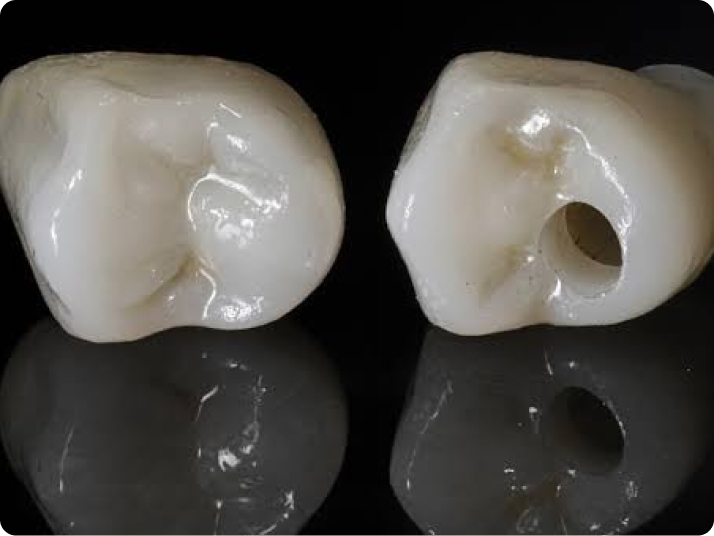
What Is a Dental Crown?
A dental crown, sometimes called a cap, is a custom-made restoration that fits completely over a damaged or weakened tooth, restoring its strength, shape, and appearance. Crowns are often recommended after root canal treatment, for a heavily filled tooth, or to protect a cracked tooth from further damage.
Crowns are made from impressions or digital scans of your tooth and are custom-shaded to blend naturally with your surrounding teeth. Depending on the material used, a crown can also be placed on top of a dental implant to replace a missing tooth.
YOUR SMILE JOURNEY
How The Treatment Works
The treatment usually follows four key stages.
01
STEP ONE
Consultation and Assessment
A clinical assessment, which may include an X-ray, is carried out to confirm that a crown is the right treatment and to check the health of the tooth and its root.
02
STEP TWO
Preparation and Impressions
The tooth is reshaped to make room for the crown, and an impression or digital scan is taken to create a precise, custom-made restoration.
03
STEP THREE
Temporary and Permanent Crown Fitting
A temporary crown may be fitted while your permanent crown is made, before the final crown is bonded securely into place.
04
STEP FOUR
Review and Aftercare Guidance
The clinician checks the fit and bite of the new crown and provides guidance on caring for it to help it last as long as possible.
Why Choose a Dental Crown?
- Strengthen and protect a heavily damaged or filled tooth
- Restore the shape and function of a tooth after root canal treatment
- Achieve a natural-looking result matched to your surrounding teeth
- Protect a cracked tooth from further damage or fracture
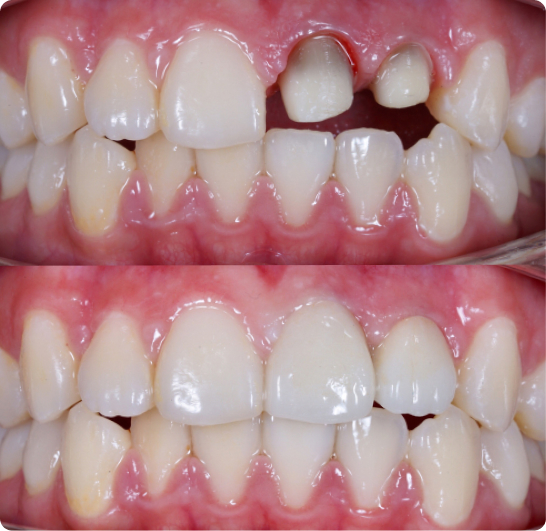
Who May Be Suitable?
- Patients with a heavily filled or weakened tooth
- Patients who have recently had root canal treatment
- Patients with a cracked or fractured tooth
- Adults wanting to restore the appearance of a damaged tooth
Important:
A clinical assessment is required to confirm that a crown is the most suitable option and that the underlying tooth and root are healthy enough to support it.

When to See a Dentist
You may wish to consult a dental professional if you notice:
- A tooth that feels weakened, cracked, or heavily filled
- Recent root canal treatment requiring further restoration
- Pain or sensitivity when biting down on a particular tooth
- Concerns about the appearance of a damaged or discoloured tooth
A professional assessment can help determine the most appropriate treatment for you.
Frequently Asked Questions
With good oral hygiene and regular check-ups, dental crowns typically last around 10 to 15 years, and often longer, depending on the material used and how well they're cared for.
A crown is often recommended after root canal treatment, particularly on back teeth, to protect the tooth from fracturing since it can become more brittle after treatment. Your dentist can advise whether this applies to your case.
The procedure is carried out under local anaesthetic, so discomfort during treatment is minimal. Some sensitivity is normal in the days afterwards and usually settles on its own.
A crown and a cap refer to the same type of restoration — a custom-made covering that fits over the entire visible part of a damaged tooth. "Cap" is simply an older, more informal term for a dental crown.